How to Repair a Pothole (And When to Call in the Pros)
If a pothole has opened up in your driveway, you’re probably weighing one of two questions: can you handle this pothole repair yourself, or is it a job for a professional asphalt repair crew? We can help you answer both, based on thirty years of patching driveways around the Portland area.
We’re William Stanley & Sons Paving, a third-generation, family-owned business that has repaired more asphalt driveways than we could ever count. Pothole repair is one of the most common calls we get, especially after a wet Oregon winter, so we put together this guide to cover what actually works and how to tell a quick patch from a repair that needs a professional.
What Actually Causes a Pothole in Asphalt?
Potholes develop in a fairly predictable sequence, even though the result always looks sudden. Water seeps into a small crack, settles into the base underneath, and then expands and contracts as temperatures shift, which loosens the material holding everything together.
Once that support weakens, the weight of a car rolling over the spot is enough to cause the surface to collapse. In the Pacific Northwest, our long rainy season speeds up this process, which is why driveways here tend to develop potholes faster than in drier parts of the country.
Can You Repair a Small Pothole Yourself?
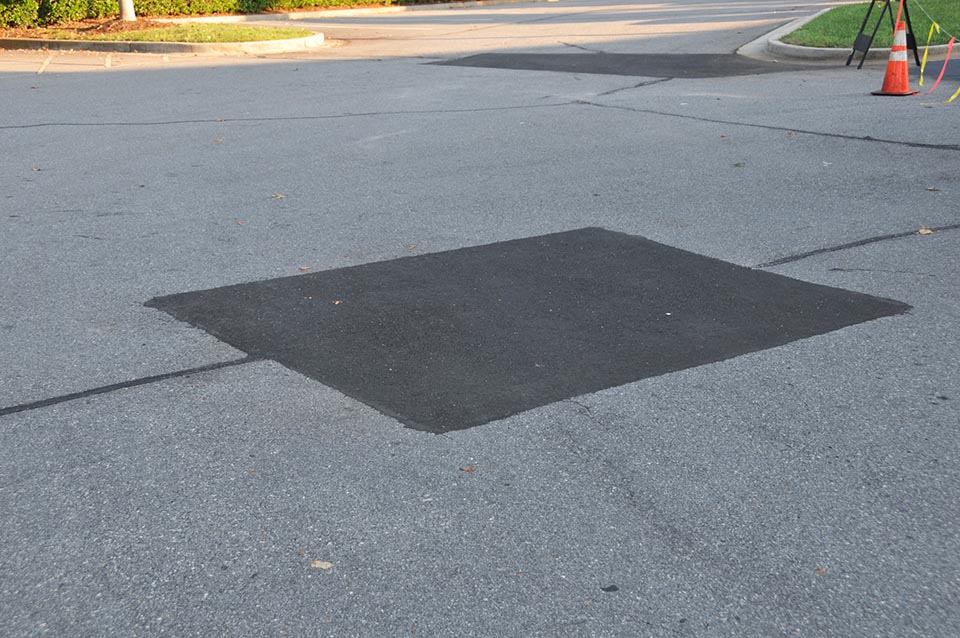 If the damage is small and isolated, and the rest of your driveway is holding up well, a do-it-yourself asphalt repair can buy you real time before anything more involved is needed. Here’s the process we’d use ourselves.
What You’ll Need
- Cold-mix asphalt patch, available at most hardware and home improvement stores
- A stiff broom or shop vacuum
- A tamper or hand compactor (a sturdy 4×4 post works fine in a pinch)
- Work gloves and safety glasses
Step-by-Step Pothole Patch
- Clean out the hole thoroughly. Sweep or vacuum out any loose gravel, dirt, and debris, since leftover material will keep the patch from bonding to the surface properly.
- Break up any loose or crumbling edges. You want your patch to sit against solid asphalt rather than material that’s already deteriorating, or it won’t hold.
- Fill the hole in layers. Pour the cold-mix asphalt in roughly two-inch layers instead of dumping the entire bag in at once, which helps the material settle evenly.
- Compact each layer before adding the next. This step matters more than most people realize, because a patch that isn’t compacted firmly enough will sink again within a few months.
- Overfill the final layer slightly. Traffic will compress the surface down to level over the following days, so a small mound now prevents a dip later.
- Give it time to set before driving on it. Keep vehicles off the area for at least twenty-four hours, longer if the weather is cold or rainy.
How Long Will a DIY Patch Actually Last?
That depends on the size of the pothole and how much daily traffic rolls over it. A small, carefully done patch on a residential driveway can hold for a year or longer. Still, think of a cold-mix patch as a temporary repair, not a permanent fix. It’s asphalt pressed into asphalt, not the fused bond you’d get from a proper hot-mix asphalt repair.
When a Pothole Repair Becomes More Than a Patch Job
This is the question homeowners ask us most, so here are the signs it’s time to bring in a professional instead of reaching for more patch material:
- The same pothole keeps reopening. If you’ve patched a spot more than once already, water is still infiltrating beneath the surface, and the underlying problem is larger than what’s visible.
- You’re dealing with more than one or two potholes. Multiple potholes usually point to a failing base underneath the entire driveway, not an isolated issue.
- The edges continue crumbling outward. That’s a sign the surrounding asphalt has already weakened considerably, leaving nothing solid for a patch to adhere to.
- You notice spiderweb or alligator-style cracking nearby. This pattern typically signals that the driveway is approaching the end of its usable life.
- Water tends to pool near the damaged area. Standing water points to a drainage problem that will keep generating new potholes no matter how many times you patch the old ones.
If any of that sounds familiar, a do-it-yourself patch is really just delaying the inevitable. At that point, it’s worth having someone experienced take a closer look at what’s happening beneath the surface.
Why a Professional Asphalt Repair Holds Up Longer
When our crew repairs a pothole, we don’t just fill the visible hole. We cut back the damaged area until we reach solid ground, fix whatever let water in to begin with, and use hot-mix asphalt that fuses with the surrounding surface instead of sitting on top of it.
That combination is what separates a patch that lasts a season from a repair that holds up for years. It’s also why we inspect the asphalt around the damage, not just the hole itself, since the real source of the problem is often a few feet away from where it first showed up.
Frequently Asked Questions About Asphalt Pothole Repair
Will a patched area match the rest of my driveway?
Not right away. Patch material often looks a slightly different shade until it weathers in over time. A professional repair blends in far more seamlessly, particularly when it’s finished off with a full sealcoat application.
What’s the best time of year for pothole repair?
Warmer, drier conditions give any asphalt repair the best chance to bond and cure properly. That said, if a pothole is a safety risk or getting worse fast, don’t wait for ideal weather. A temporary patch now beats a bigger repair bill later.
How much does professional pothole repair typically cost?
That depends on the extent of the damage and what’s causing it underneath. A small, contained repair costs less than restoring a driveway with a failing base. The most reliable way to know for sure is having your driveway evaluated in person.
Can sealcoating help prevent future potholes?
Sealcoating won’t repair an existing pothole, but it does help shield asphalt from the water damage that causes potholes to form in the first place. It’s one of the most cost-effective ways to extend the life of a driveway you’ve already invested in.
Get a Second Opinion, No Pressure
If you’re unsure whether your driveway needs a simple patch or a thorough asphalt repair, we’re glad to take a look and give you an honest answer. We serve Portland, Gresham, Lake Oswego, West Linn, Tigard, Hillsboro, Vancouver WA, and the surrounding communities, so reach out anytime.