
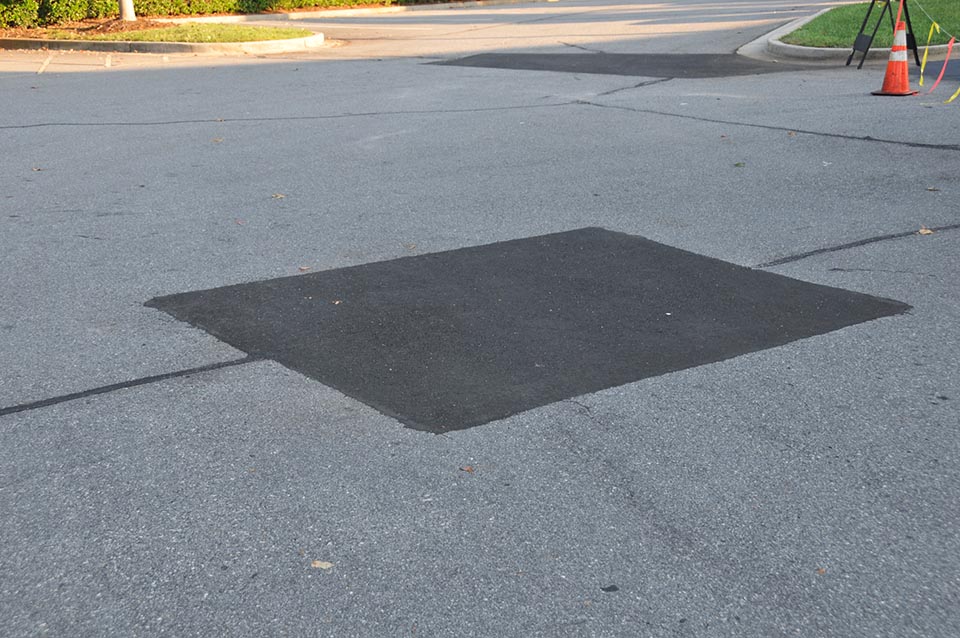
You can fix a small, shallow pothole yourself with a bag of cold patch asphalt, a broom, and a tamper, as long as you clean the hole well and pack the patch down tight in layers. That kind of patch can hold for a year or two, but it won’t last if the base under your asphalt has failed, and in that case you need a professional asphalt pothole repair with hot asphalt.
We’re William Stanley & Sons Paving, a third-generation family business that has been patching driveways and parking lots around Portland for more than 30 years, and pothole repair is one of the most common calls we get after a wet Oregon winter. Here’s what actually works, how to do it yourself, and how to tell when a patch isn’t going to be enough.
What Causes Potholes in Asphalt?
Nearly every pothole starts with water, which seeps through a small crack, soaks into the rock base under the asphalt, and then expands and shrinks as temperatures change until the material holding your pavement up starts to loosen. Once that base gets soft, the weight of a car rolling over the spot is enough to break the surface apart.
That’s also why potholes come back. A patch that only fills the hole sits on the same soft, wet base, so it sinks or pops out within a season or two, and the seam around it gives water a new way in.
Why Are Potholes So Common in Portland?
Our long rainy season keeps water on the pavement for months, and most winters add a few cold snaps that freeze and thaw it. After the winter storms of early 2024, the Portland Bureau of Transportation filled 1,800 potholes in a two-week push focused on East Portland, and private driveways and parking lots take the same beating as city streets.
Can You Fix a Pothole Yourself?
Often you can, but it depends on what’s going on below the surface. DIY asphalt repair works well for a single pothole about the size of a dinner plate or smaller and only a couple of inches deep, along with hairline cracks up to a quarter inch wide and faded asphalt that just needs a fresh coat of sealer.
It’s time to call a professional when you see any of these:
- More than one or two potholes, or one bigger than a dinner plate
- A pothole you’ve already patched that keeps opening back up
- Cracks wider than a quarter inch, or a web of small cracks that looks like an alligator’s back
- Asphalt that feels soft, spongy, or is sinking
- Water that pools near the damage and won’t drain
Those signs all point to a problem in the base rather than the surface, and since no amount of patching fixes a failed base, a DIY patch on that kind of damage only covers it up for a while.
How to Fix a Pothole Yourself, Step by Step
If your pothole is small and the rest of the driveway is in good shape, you’ll need a bag of cold patch asphalt from a hardware store, a stiff broom or shop vacuum, a shovel, a hand tamper (a sturdy 4×4 post works in a pinch), and gloves and safety glasses. Then follow the same steps we’d use on our own homes:
- Clean out the hole. Sweep or vacuum out all the loose gravel, dirt, and standing water, because leftover debris keeps the patch from sticking.
- Trim the edges. Break off any loose, crumbling asphalt and square up the sides with a shovel so the patch sits against solid pavement.
- Fill in layers. Add the cold patch about two inches at a time instead of dumping the whole bag in at once.
- Compact each layer. Tamp every layer down firmly before adding the next, since a patch that isn’t packed tight will sink within a few months.
- Overfill the top slightly. Leave a small mound and tamp it hard, because traffic will press it down level over the next few days.
- Let it set. Keep cars off the patch for at least 24 hours, and longer when it’s cold or wet.
The most common mistakes we see are skipping the cleanup and not compacting enough, and those two are why so many DIY patches pop out within a season.
What’s the Best Weather for DIY Asphalt Repair?
Dry, mild weather above about 50 degrees works best, because cold patch bonds and cures better when it’s warm and the pavement is dry, which in Oregon usually means late spring through early fall. If a pothole is a safety risk, though, don’t wait for perfect weather, since a temporary patch now beats a bigger repair later.
What Is Cold Patch Asphalt?
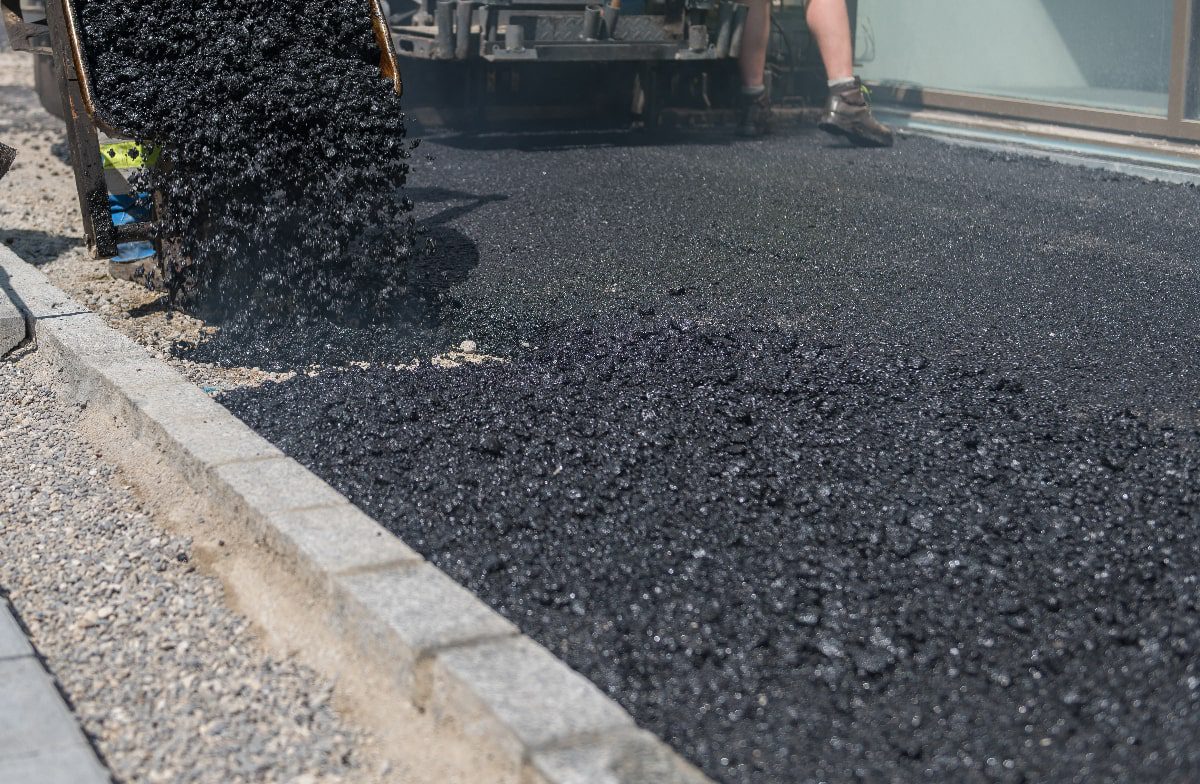
Cold patch asphalt is a premixed asphalt sold in bags or tubs that you can pack into a hole straight from the container without any heating or special equipment, which is why it’s the go-to material for DIY pothole repair and for road crews making emergency fixes in winter.
How Long Does a Cold Patch Last?
A small, well-done cold patch on a home driveway can last a year or two. It’s a real repair, but it’s still temporary, because cold patch is basically asphalt pressed into asphalt rather than new material that fuses with the old.
Even professional road crews see cold patches fail. In a Federal Highway Administration study that tracked cold mix pothole patches at test sites across the U.S. and Canada, only 56 percent were still in place when monitoring ended, although the researchers found that good materials and careful work helped patches last for several years.
What’s the Difference Between Cold Patch and Hot Asphalt?
Cold patch is made to work at any temperature and simply sits on top of the existing base. Hot asphalt comes from a plant at high heat and is placed by a crew after the damaged area and base are prepared, so it bonds with the surrounding pavement and seals out water, which is why it’s used for permanent repairs.
How Do Professionals Fix Potholes for Good?
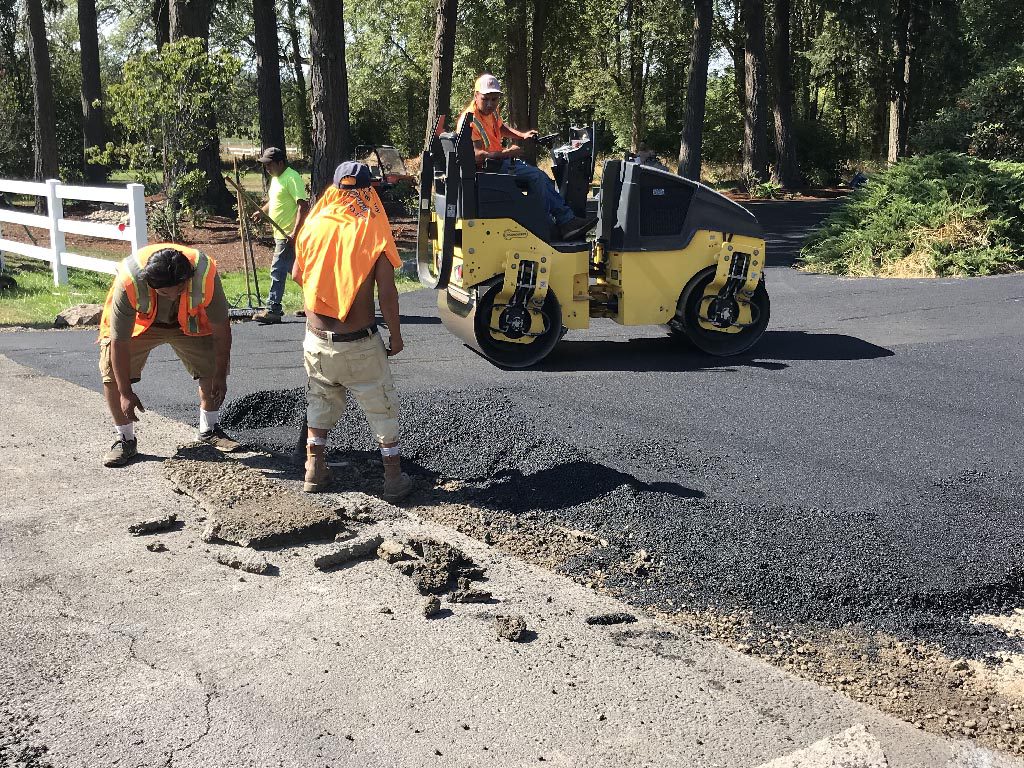
To fix a pothole for good, you need to cut out the damaged asphalt, repair any soft or wet base, fill the area with hot asphalt, compact it tight, and seal the edges so water can’t get back in. The right method depends on how deep the damage goes.
| Method | How it works | Best for | How long it lasts |
|---|---|---|---|
| Throw and roll | Cold patch is packed into the hole and driven over | Emergency and winter repairs | Months to a few years |
| Saw cut and hot mix patch | Edges are cut square, loose material is removed, and hot asphalt is placed and rolled | Potholes on a solid base | Many years |
| Infrared repair | The area is heated, blended with fresh hot asphalt, and compacted into one seamless patch | Shallow potholes on a solid base | Many years |
| Full-depth patch | The asphalt and soft base are dug out, the base is rebuilt, and new asphalt is placed in layers | Potholes caused by a failed base | As long as the surrounding pavement |
A saw cut and hot mix patch is the most common permanent fix for driveways and parking lots, but when the area around the hole sinks or is covered in alligator cracks, a full-depth repair is the only one that truly fixes the cause. Our asphalt repair crew also checks the pavement around the hole, since the real source of the problem is often a few feet away.
Should Businesses Patch Parking Lot Potholes Themselves?
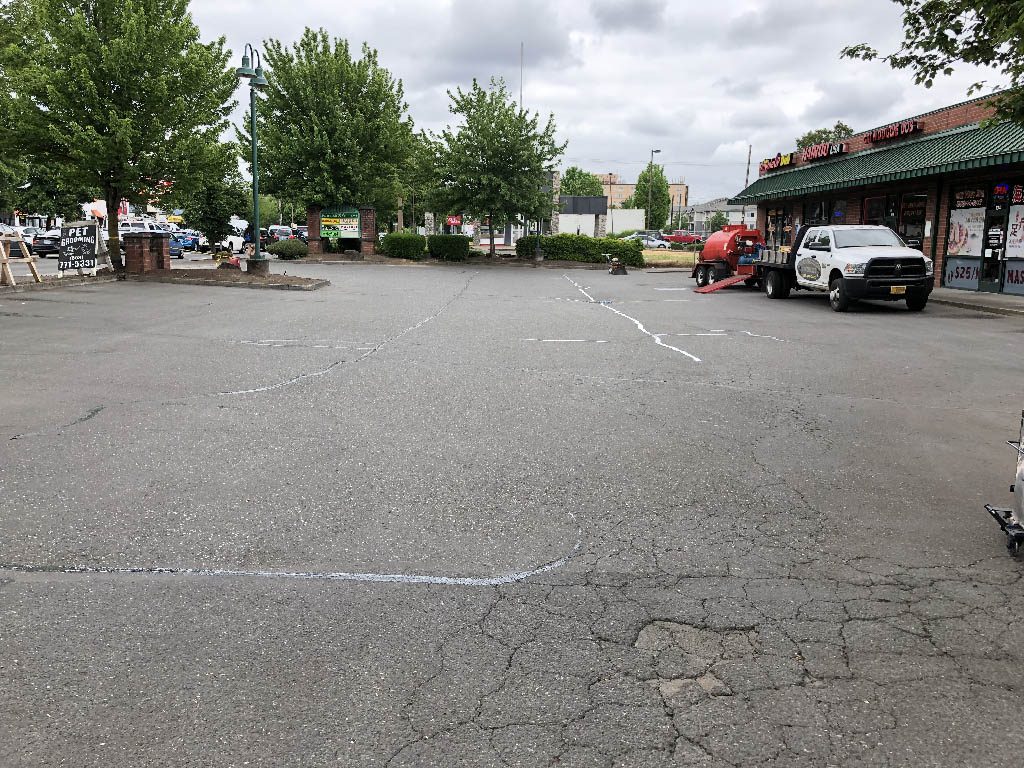
A DIY patch can work as a short-term fix for a small spot in a low-traffic back lot, but anything customers or employees cross every day is better left to a professional. A pothole or lumpy patch is a trip and fall risk, and delivery trucks and steady traffic wear out a cold patch far faster than a family car does.
Accessibility matters, too. The U.S. Access Board’s guide to floor and ground surfaces explains that accessible parking spaces, aisles, and routes must be firm and stable, with any change in height of more than a quarter inch beveled or ramped, so a pothole or uneven patch in those areas can create a compliance problem.
The good news is that a crew can usually work in sections so most of your lot stays open, and grouping all your repairs into one visit costs less per repair than fixing each new pothole as it shows up. Pairing patch work with sealcoating and fresh ADA parking striping also makes sense while the lot is already partly closed.
How Much Does Pothole Repair Cost?
The cost depends on the size and depth of the pothole, the repair method, whether the base needs work, and how many potholes are fixed in one visit. A bag of cold patch costs much less than a professional patch, but a professional repair is often cheaper in the long run because you aren’t paying to fix the same spot every year.
For a sense of scale, the Portland Bureau of Transportation has reported that a typical one-square-foot pothole costs the city around $300 to repair, while preventive pavement maintenance runs $0.55 to $2.25 per square foot. The same lesson holds for property owners, since sealing cracks and sealcoating on schedule costs far less than fixing potholes one at a time.
Who Fixes Potholes in the Street?
The city or county that maintains a public street is responsible for its potholes, so in Portland you can report them at PDX Reporter or call PBOT’s 24-hour maintenance line at 503-823-1700, while in Gresham, Vancouver, WA, and other nearby cities you’d contact public works. Potholes on private property, like your driveway, a shared private road, or a business parking lot, are the owner’s responsibility.
When Is Patching Not Enough?
Patching makes sense when the damage is limited to a few spots and the rest of the pavement is in decent shape, but it stops making sense when you’re patching the same areas every year, new potholes keep showing up, or large areas are covered in alligator cracking. At that point, asphalt resurfacing or replacing the worst sections will usually give you more for your money, and for businesses, commercial asphalt resurfacing can often be done in phases so you can stay open.
How Can You Prevent Potholes?
The best pothole repair is the one you never need, and most potholes can be prevented by keeping water out of your pavement. Seal small cracks before the rainy season (our guide on how to fix driveway cracks shows you how), sealcoat on schedule to protect the surface from sun, rain, and oil, fix low spots and blocked drains that let water sit on the asphalt, and repair damage while it’s still small.
Frequently Asked Questions About Asphalt Pothole Repair
What size pothole is too big to fix yourself?
As a rule of thumb, anything bigger than a dinner plate or deeper than a couple of inches is more than a bag of cold patch can reliably handle, and several potholes close together usually mean the base has failed.
What’s the best way to fix a pothole permanently?
Cut out the damaged area, repair any soft or wet base, fill the hole with hot asphalt, compact it well, and seal the edges. If the base has failed, a full-depth repair is the only fix that will truly last.
Will a patched pothole match the rest of my driveway?
Not right away, since patch material is usually a slightly different shade until it weathers. A professional repair blends in much better, especially when the whole driveway is sealcoated afterward.
Can potholes be fixed in the winter?
Yes, but winter repairs are usually temporary because cold, wet weather makes it hard for hot asphalt to bond, so crews often use cold patch to make a pothole safe and come back for a permanent repair when it’s drier.
Does sealcoating prevent potholes?
Sealcoating won’t fix a pothole you already have, but it helps protect your asphalt from the water damage that causes them, which makes it one of the most affordable ways to help a driveway or parking lot last longer.
Not Sure If You Need a Patch or a Pro?
William Stanley & Sons Paving has repaired driveways and commercial parking lots across Portland, Gresham, Lake Oswego, West Linn, Tigard, Hillsboro, Vancouver, WA, and nearby communities for more than 30 years. We’ll take a look, find out what’s really causing your potholes, and give you an honest answer about whether a simple patch will do the job.
Call us at 503-243-1274 or request a free estimate today.

