A Complete Guide for Property Owners
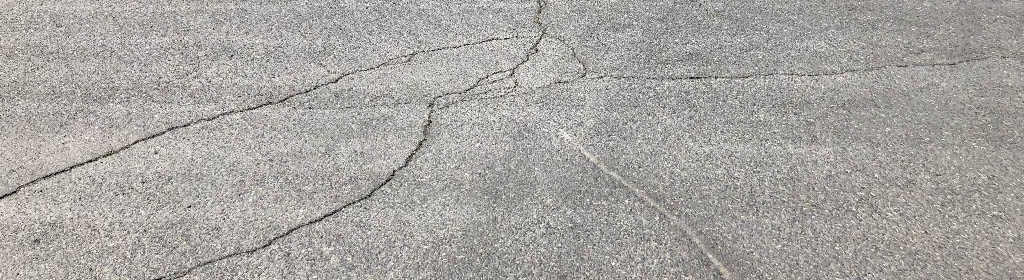
A beautiful, smooth driveway is a major asset to any home or commercial property. It welcomes guests, provides a safe surface for vehicles, and adds immediate market value to your estate. However, over time, even the most expertly installed asphalt surfaces can develop small fractures. If you ignore these minor imperfections, they can quickly expand into deep potholes, leading to expensive structural failures. Learning how to fix driveway cracks early is the most cost-effective way to preserve your pavement investment.
Whether you are a homeowner managing a residential driveway or a commercial property manager overseeing a multi-family housing development, proactive maintenance is the key to extending the lifespan of your surface. William Stanley & Sons Paving provides comprehensive paving services for both commercial and residential owners.
Why Do Driveway Cracks Form in the First Place?
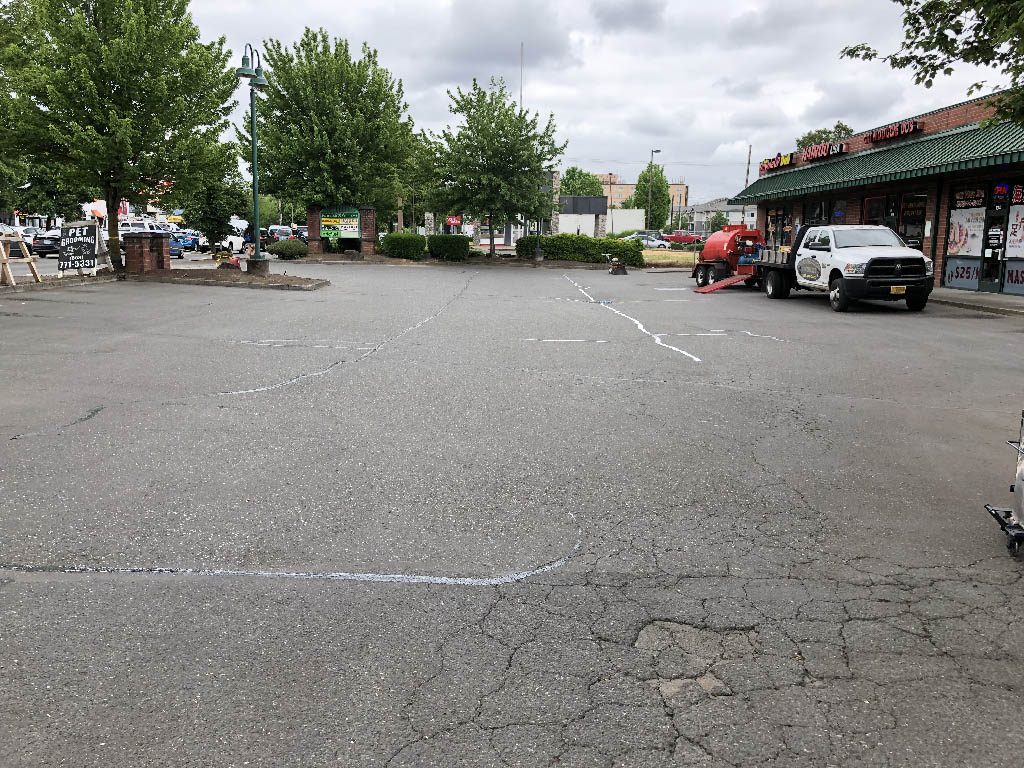 Understanding what causes pavement damage helps you select the right method to repair it. Pavement is designed to be tough, but it is continuously exposed to heavy physical stress and shifting environmental conditions.
Several primary factors contribute to surface cracking:
- Water Infiltration: Rainwater is the primary enemy of outdoor pavement. When water pools on the surface, it eventually finds tiny microscopic pores in the material and begins to seep downward.
- The Freeze-Thaw Cycle: During colder months, water trapped beneath the surface freezes and expands. This upward pressure forces the pavement to lift and fracture. When the ice melts, it leaves an empty void beneath the surface, causing the pavement to sag and crack under weight.
- Heavy Traffic Loads: Vehicles like delivery trucks, garbage services, and heavy equipment exert immense downward pressure on your driveway surface. If the underlying foundation is weak, this weight causes structural rutting and cracking.
Fix Driveway Cracks: The Hidden Risks of Delaying
It can be tempting to overlook a small, hairline fracture on your driveway surface, but minor blemishes rarely stay small for long. Treating crack repair as a low priority can jeopardize the structural integrity of your entire driveway base.
When a crack opens, it acts as a direct funnel for surface water to reach the underlying crushed stone foundation. Once this gravel base becomes saturated, it loses its ability to support weight. As cars drive over the weakened area, the asphalt flexes beyond its limit, breaking into a web of interconnected fractures known as alligator cracking.
Once your driveway reaches this stage, simple crack fillers will no longer work, and a full structural replacement or overlay is usually required.
How Professionals Safely and Effectively Fix Driveway Cracks
Fixing a driveway properly requires specialized preparation and heavy-duty materials. A lasting repair involves much more than simply pouring a retail patching compound over the visible damage. Professionals follow a rigorous process to ensure the patch bonds permanently with the existing pavement.
1. Deep Cleaning and Debris Extraction
The first and most critical step is removing all dirt, moss, loose rock, and organic debris from inside the crack. Professional crews utilize high-pressure air compressors and specialized wire-brush machines to scour the vertical walls of the fracture.
If any loose material or vegetation is left behind, the new sealant will adhere to the dirt rather than the pavement, causing the repair to peel away within a few months.
2. Moisture Eradication
Applying a repair compound to a damp crack is a guaranteed recipe for failure. Any residual moisture trapped inside the pavement will turn into water vapor when exposed to hot sealant or warm sunshine. This vapor creates air bubbles that destroy the adhesive bond.
Professionals use thermal lances to heat the crack, drying out the pavement completely while slightly warming the surrounding material to accept the patch.
3. Precision Hot-Pour Rubber Application
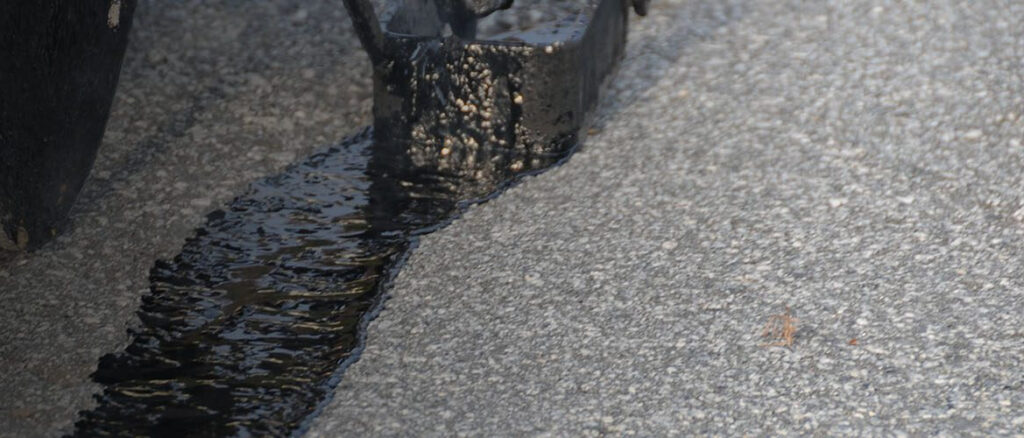
For deep, active cracks, commercial-grade hot-pour rubberized sealant provides the most resilient solution. Heated to over 350°F in a specialized melting kettle, this flexible rubber compound is injected directly into the cleaned fracture. The extreme heat causes the sealant to fuse directly with the walls of the pavement. As it cools, it remains highly flexible, allowing the repair to stretch and compress safely during seasonal temperature changes.
Residential vs. Commercial Crack Repair: Main Differences
While the core chemistry of fixing pavement remains consistent, the scale and approach shift significantly depending on the property type.
| Detail | Residential Driveways | Commercial Parking Areas |
| Primary Traffic Type | Light passenger cars and SUVs | Delivery trucks, buses, heavy traffic |
| Common Crack Type | Edge cracking from landscaping | Fatigue cracking from heavy turning |
| Repair Window | Flexible schedule | Tight timelines to avoid business disruption |
| Primary Goal | Maximize residential curb appeal | Minimize legal liability and ensure safety |
Commercial properties require heavy-duty maintenance strategies. Because a commercial parking lot handles constant turning movements from heavy vehicles, the sealant used must feature high track resistance to prevent it from smearing or tracking onto shoes and tires during hot summer days.
How to Fix Driveway Cracks Frequently Asked Questions
Can you fix a driveway crack that has grass growing out of it?
Yes, but you must completely kill and remove the vegetation first. Simply cutting the grass down is not enough, as the roots will continue to grow and rupture the new sealant. The crack must be treated with a commercial herbicide, cleared deeply with a mechanical wire brush, and blown clean before the repair material is applied.
What is the difference between cold-pour and hot-pour crack sealants?
Cold-pour sealants are liquid compounds typically sold in bottles at hardware stores. They are convenient for very small, DIY hairline touch-ups but remain relatively brittle once dry. Hot-pour sealants are industrial rubber blocks melted at extreme temperatures. Hot-pour compounds offer superior flexibility, stronger adhesion, and can withstand heavy vehicle traffic for many years without failing.
Is it possible to repair a driveway if it has turned into a pothole?
Yes. Potholes require a different repair process known as asphalt patching. The damaged, crumbling area must be cleanly cut out down to the stone base. Fresh, hot-mix material is then installed into the void and compacted flush with the surrounding driveway using a heavy vibratory roller or plate compactor.
How long does a typical driveway crack repair last?
A high-quality, professional hot-pour crack repair will typically last between three to five years. The exact lifespan depends on the condition of your underlying foundation, local traffic loads, and how frequently you apply a protective sealcoat to the entire surface.
When is a driveway too damaged to fix with simple crack sealing?
If your driveway exhibits extensive alligator cracking—meaning the surface resembles the scales of an alligator with multiple interconnecting fractures—crack sealing will no longer preserve the surface. This pattern indicates that the underlying stone base has failed completely. At this stage, the area must be removed and replaced to restore structural safety.
Secure Your Property Infrastructure With Third-Generation Experts
When it comes to protecting your property value, working with an experienced team ensures your repairs last for the long term.
William Stanley & Sons Paving is a third-generation, locally owned and operated company with more than 30 years of dedicated pavement experience in the greater Portland region. Serving communities across Gresham, Lake Oswego, West Linn, Tigard, Hillsboro, and Vancouver, WA, our family legacy is rooted in unmatched efficiency, honesty, and professional craftsmanship. We take great pride in delivering lasting, budget-friendly solutions that keep your home or business safe, accessible, and looking its best.
Don’t let minor surface fractures turn into expensive structural failures. Contact William Stanley & Sons Paving today for a competitive estimate for your driveway repair needs.