What Pros Do Differently on Driveways and Parking Lots
To fix potholes for good, you need to remove the damaged asphalt, repair any weak or wet base underneath, and fill the area with hot asphalt that’s compacted tightly and sealed at the edges so water can’t get back in. A quick scoop of patch material can make a hole safe for a while, but it rarely lasts because it doesn’t fix the water and base problems that caused the pothole in the first place.
If you’re dealing with one small pothole in your driveway and want to try a patch yourself, our guide on whether you can do asphalt pothole repair yourself walks you through it step by step. This post picks up where that one leaves off, explaining how professionals make pothole repairs last for years on driveways and commercial parking lots, what each method costs you in time and money, and when it’s smarter to stop patching altogether.
Why Do Potholes Keep Coming Back?
Potholes come back when the repair only fills the hole and leaves the real problem in place. Nearly every pothole starts with water, which seeps through small cracks, softens the rock base under the asphalt, and then lifts and weakens the surface as it freezes and thaws. Once the base can’t hold up the weight of passing cars, the asphalt above it breaks apart and a pothole forms.
A patch that sits on top of that same soft, wet base will sink or pop out, usually within a season or two. The edges of a quick patch also leave a seam where water can sneak back in, which is why you’ll often see a new pothole open right next to an old repair.
Why Are Potholes So Common in Portland?
Our long rainy season keeps water in contact with pavement for months at a time, and the cold snaps we get most winters add freeze and thaw cycles on top of that. After the severe winter storms of early 2024, the Portland Bureau of Transportation filled 1,800 potholes during a two-week push focused on East Portland, and private driveways and parking lots take the same beating as city streets.
Temporary vs. Permanent Pothole Repair
The biggest difference between a temporary and a permanent repair is what happens below the surface.
- Temporary repairs use cold patch, a premixed asphalt sold in bags or tubs that you can pack into a hole in almost any weather. It’s a good stopgap for safety, but it doesn’t bond tightly to the old pavement and does nothing to fix the base.
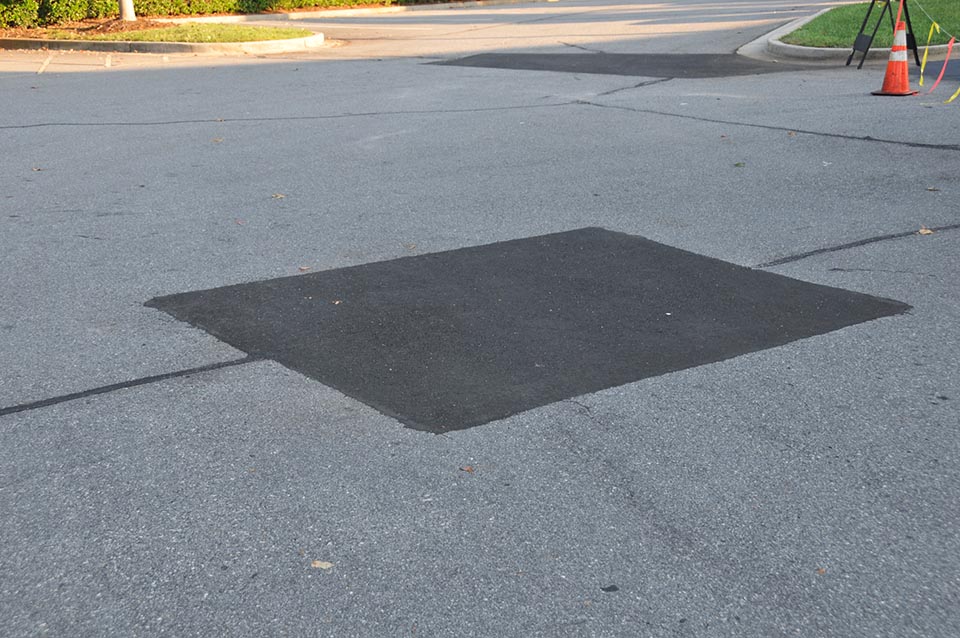
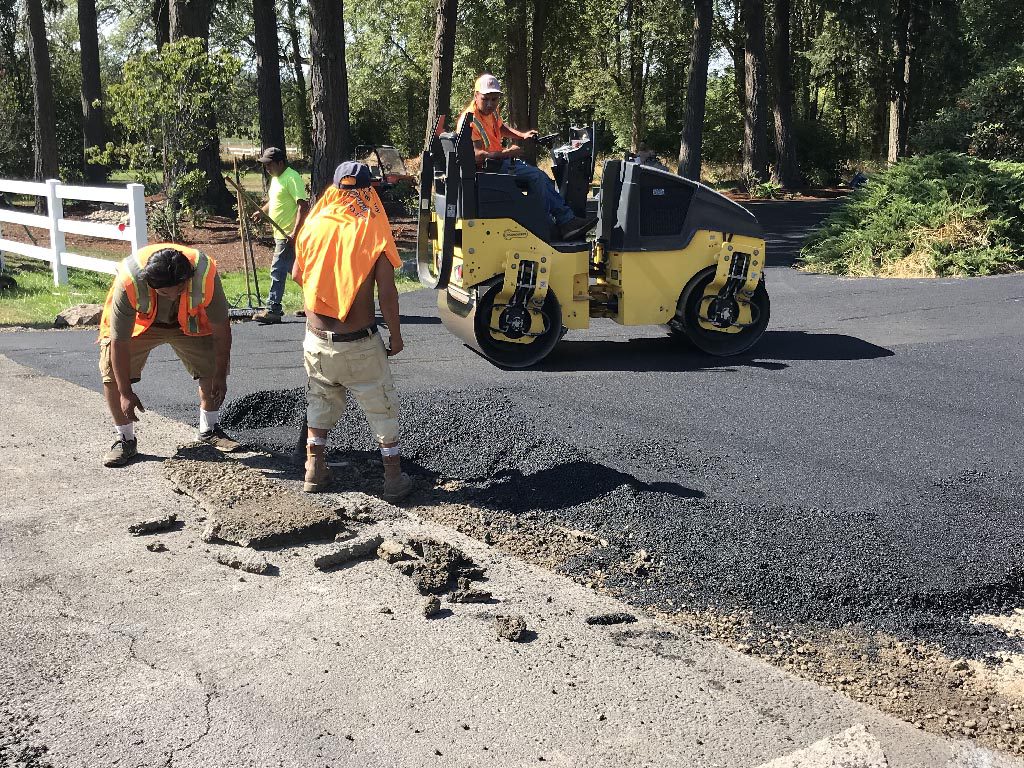
- Permanent repairs use hot mix asphalt from a plant, placed in a clean, square-cut hole over a solid base and compacted with heavy equipment, so the new asphalt bonds with the old and seals out water.
Even patches made by professional road crews don’t always last. In a Federal Highway Administration study that tracked cold mix pothole patches at test sites across the U.S. and Canada, only 56 percent were still in place when the monitoring ended. The researchers also found that quality materials made a real difference, with good patches staying in service for several years.
Pothole Repair Methods Compared
Professionals have several ways to fix a pothole, and the right one depends on how deep the damage goes and how long you need the repair to last.
| Method | How it works | Best for | How long it lasts |
|---|---|---|---|
| Throw and roll | Cold patch is placed in the hole and packed down by driving over it | Emergency and winter repairs | Months to a few years |
| Saw cut and hot mix patch | Edges are cut square, loose material is removed, and hot asphalt is placed and rolled | Potholes where the base is still solid | Many years |
| Infrared repair | The surface around the hole is heated, reworked with fresh hot mix, and compacted into one seamless patch | Shallow potholes on a sound base | Many years |
| Full-depth patch | The asphalt and soft base are dug out, the base is rebuilt, and new asphalt is placed in layers | Potholes caused by a failed or wet base | As long as the surrounding pavement |
What Is a Saw Cut and Hot Mix Patch?
This is the most common permanent repair for driveways and parking lots. The crew saw cuts the damaged area into a neat square or rectangle that extends past the broken asphalt, removes everything loose, and sprays a tack coat on the sides and bottom so the new asphalt sticks. They then fill the hole with hot mix and compact it with a roller or plate compactor until it’s level with the surrounding pavement. Sealing the edges afterward helps keep water out of the seam.
What Is Infrared Pothole Repair?
Infrared repair uses a large heater to soften the asphalt in and around the pothole, so the crew can rake in fresh hot mix and blend it with the old material before compacting it. Because the old and new asphalt melt together, the finished patch has no cold seam for water to get into. It works best on shallow potholes over a solid base, since heating the surface doesn’t fix a base that’s soft or wet.
When Do You Need a Full-Depth Repair?
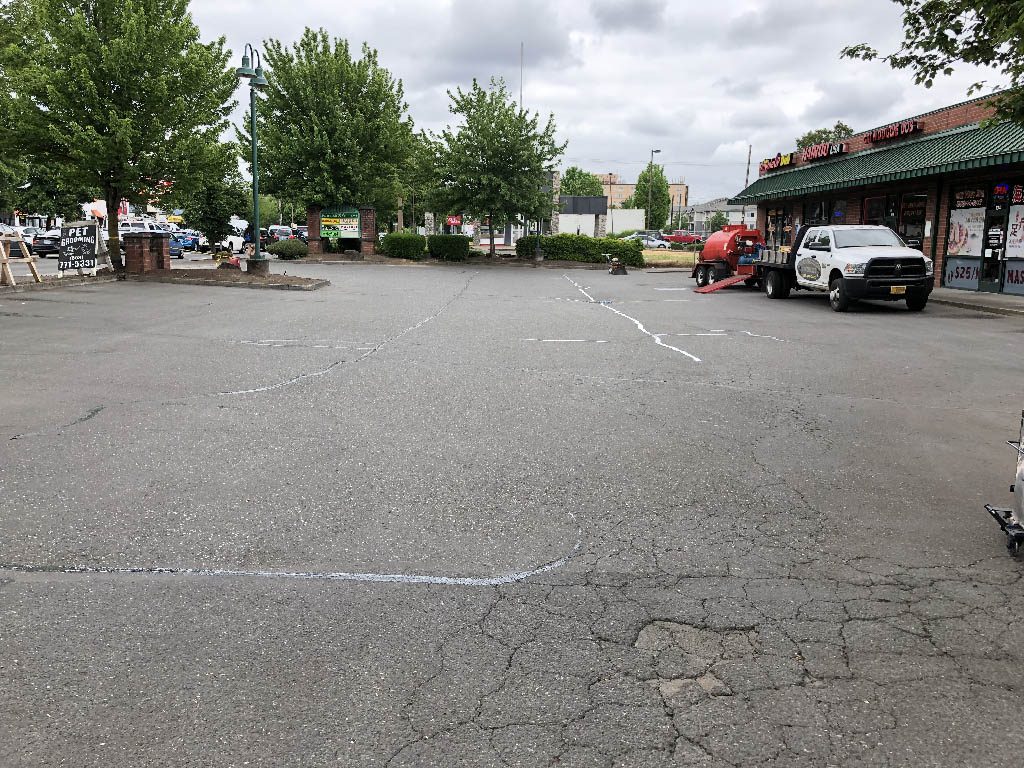
You need a full-depth repair when the base under the pothole has failed. You can usually tell because the area around the hole sinks, feels soft, or is covered in a web of small cracks that look like an alligator’s back. In that case, the crew digs out the asphalt and the soft base, adds new crushed rock, compacts it, and paves new asphalt in layers. It’s more work up front, but it’s the only repair that truly fixes the cause.
Parking Lot Pothole Repair: What Property Managers Should Know
Potholes in a parking lot are more than an eyesore, because every customer, tenant, and delivery driver who crosses your lot is driving or walking over them. Fixing them quickly and properly protects people, keeps your property looking cared for, and saves money over the life of the lot.
Why Should Parking Lot Potholes Be Fixed Quickly?
A pothole in a busy lot can cause trip and fall injuries and damage to tires and wheels, and it grows a little bigger with every car that hits it and every rain that fills it. Fixing it while it’s small keeps the repair simple. If you’re worried about liability, it’s worth asking your insurance agent how your coverage handles pavement hazards.
Do Potholes Affect ADA Compliance?
They can. The U.S. Access Board’s guide to floor and ground surfaces explains that accessible parking spaces, access aisles, and accessible routes must be firm, stable, and slip resistant, and that any change in height of more than a quarter inch has to be beveled or ramped. A pothole in an accessible parking space, access aisle, or walking route to your entrance can create exactly the kind of uneven surface those rules are meant to prevent. Once the repair is done, refreshing your ADA parking striping keeps those spaces clearly marked.
Can Potholes Be Fixed Without Closing the Parking Lot?
In most cases, yes. A crew can work in sections, coning off only the area being repaired while the rest of the lot stays open, and hot mix patches can usually take traffic once they’ve cooled. Many property managers schedule repairs for early mornings, evenings, or weekends so the work doesn’t get in the way of customers.
How Can I Save Money on Parking Lot Pothole Repair?
The best way to save is to group your repairs. Every visit from a paving crew has setup costs, so fixing all of your potholes and cracked areas in one trip costs less per repair than calling someone out for each new hole. Pairing patch work with sealcoating and fresh parking lot striping also makes sense, since the lot will already be partly closed and the new patches will blend in better once the whole surface is sealed.
How Much Does It Cost to Fix a Pothole?
The cost to fix a pothole depends on its size and depth, the repair method, whether the base needs work, and how many potholes are fixed in the same visit. For a sense of scale, the Portland Bureau of Transportation has reported that a typical pothole of about one square foot costs the city around $300 to repair, while preventive pavement maintenance runs between $0.55 and $2.25 per square foot.
That gap is the main lesson for property owners as well. Sealing cracks and sealcoating on schedule costs far less than fixing potholes one at a time, and a full-depth repair costs more than a surface patch but often saves money because you aren’t paying to fix the same spot every year.
Pothole in the Street? Who Fixes What
If the pothole is on a public street, the city or county that maintains the street is responsible for fixing it, not the homeowner or business next to it.
- In Portland, you can report a pothole at PDX Reporter, by emailing pdxroads@portlandoregon.gov, or by calling PBOT’s 24-hour maintenance line at 503-823-1700. PBOT’s goal is to fill potholes within 30 days of receiving a report.
- In Gresham, Vancouver, WA, and other nearby cities, report potholes to that city’s public works department, and use your county’s road department for unincorporated areas.
Potholes on private property, such as your driveway, a shared private road, or a business parking lot, are the owner’s responsibility. That’s where a paving contractor like us comes in.
When Patching Isn’t Enough
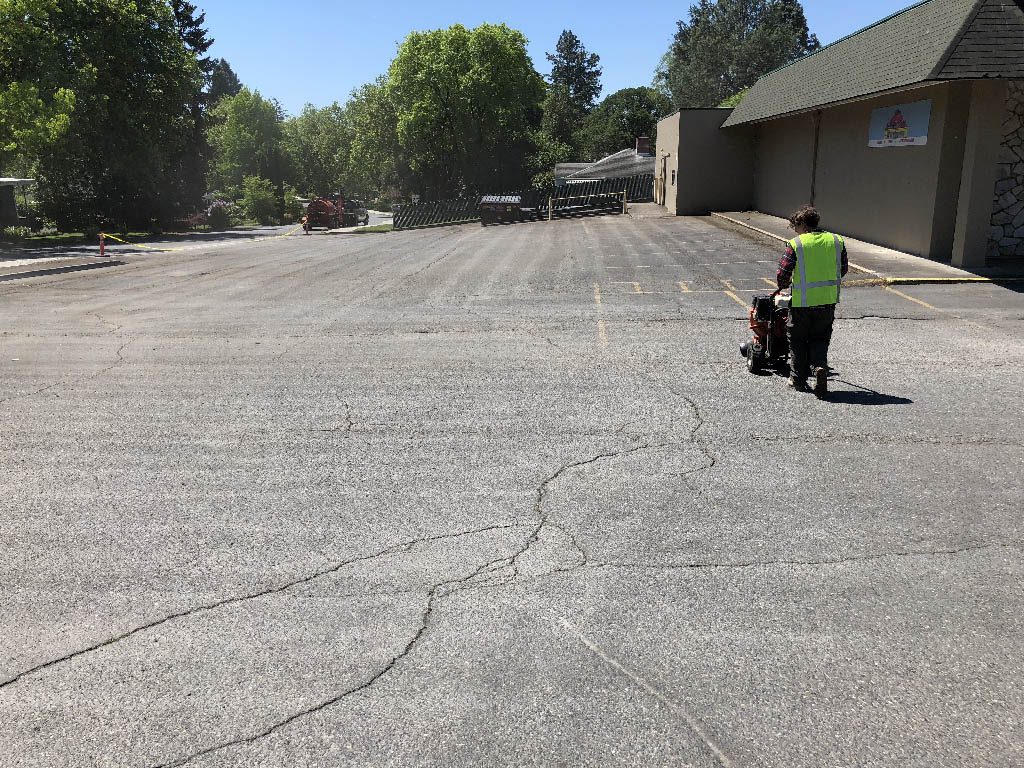
Patching is the right call when the damage is limited to a few spots and the rest of the pavement is in decent shape. It stops making sense when you’re patching the same areas every year, when potholes keep showing up in new places, or when large sections are covered in alligator cracking.
At that point, you’ll usually get more for your money from asphalt resurfacing, which adds a fresh layer over a solid base, or from replacing the worst areas entirely. For parking lots, our commercial asphalt resurfacing work can often be phased so your business stays open. An honest contractor will tell you which option makes sense rather than selling you patches you’ll be paying for again next year.
How to Prevent Potholes
The best pothole repair is the one you never need. Most potholes can be prevented by keeping water out of the pavement and away from the base.
- Seal cracks early. Small cracks are where water gets in, so filling them before winter stops most potholes before they start.
- Sealcoat on schedule. Sealcoating protects the surface from sun, rain, and oil, which keeps the asphalt flexible and helps it resist cracking.
- Fix drainage problems. Water that pools on the pavement or runs underneath it will eventually soften the base, so fixing low spots and blocked drains pays off.
- Repair damage while it’s small. A single pothole caught early is a quick fix, while a pothole left through a rainy season can turn into a much larger repair.
Frequently Asked Questions About Fixing Potholes
What do professionals use to fix potholes?
Professionals use hot mix asphalt for permanent repairs, along with saw cutting equipment, tack coat, and rollers or plate compactors. Cold patch is used mainly for emergency or winter repairs until a permanent fix can be made.
What is the best way to fix a pothole permanently?
The best way to fix a pothole permanently is to cut out the damaged area, repair any soft or wet base, fill the hole with hot mix asphalt, compact it well, and seal the edges. If the base has failed, a full-depth repair is the only fix that will truly last.
How long does a professional pothole repair last?
A properly done hot mix or full-depth patch can last for many years, often as long as the pavement around it. How long it holds up depends on the condition of the surrounding asphalt, drainage, and how much heavy traffic the area sees.
Can potholes be fixed in the winter?
Yes, but winter repairs are usually temporary. Cold, wet weather makes it hard for hot asphalt to bond and compact properly, so crews often use cold patch to make a pothole safe and then come back for a permanent repair when the weather is drier.
Why does the area around my patched pothole keep breaking?
The area around a patch usually keeps breaking because the base underneath is still weak or wet, or because water is getting into the seam between the patch and the old asphalt. A full-depth repair with sealed edges, along with fixing any drainage problems, usually solves it.
Who is responsible for potholes in a parking lot?
The property owner is responsible for potholes in a private parking lot, although a lease may assign upkeep to a tenant or property manager. Potholes on a public street next to the lot are the city’s or county’s responsibility.
Ready to Fix Your Potholes for Good?
William Stanley & Sons Paving has repaired driveways and commercial parking lots across Portland, Gresham, Lake Oswego, West Linn, Tigard, Hillsboro, Vancouver, WA, and nearby communities for more than 30 years. As a third-generation family business, we’ll find out what’s really causing your potholes and recommend the asphalt repair that makes sense for your property and your budget.
Call us at 503-243-1274 or request a free estimate today.