A Portland Homeowner’s Guide
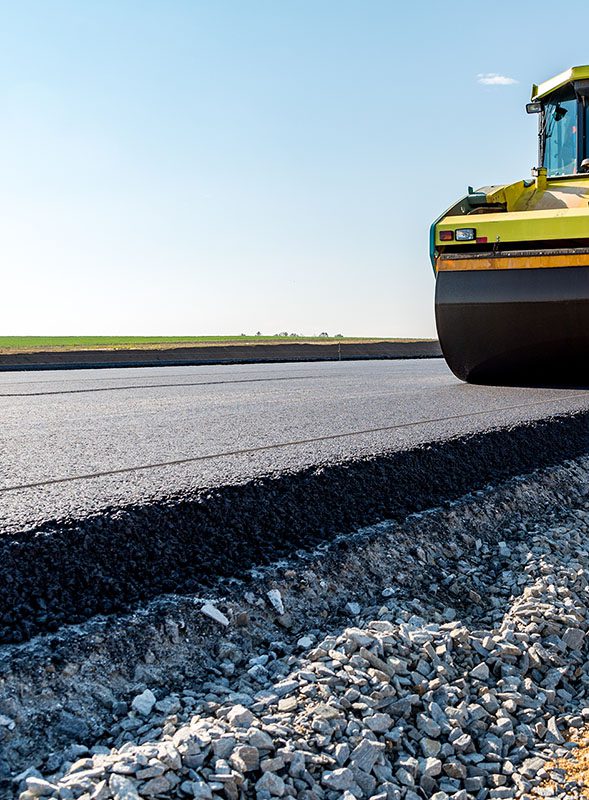
Most residential driveways need 2 to 3 inches of compacted asphalt on top of 4 to 8 inches of compacted crushed rock. If you park an RV, a work truck, or a trailer at home, plan on at least 3 inches of asphalt and a deeper rock base. If you’re paving over an existing driveway, an asphalt overlay is usually 1.5 to 2 inches thick.
Those are the quick numbers. Asphalt driveway thickness also depends on your soil, your drainage, and what you drive. Here’s what goes into the right answer for your home.
The Short Answer: Typical Asphalt Driveway Thickness
A well-built asphalt driveway has two main layers. Each one does its own job.
- Asphalt surface: 2 to 3 inches after compaction for cars, SUVs, and pickups.
- Crushed rock base: 4 to 8 inches after compaction, depending on your soil and how well it drains.
The Colorado Asphalt Pavement Association’s driveway guide calls for at least 3 inches of asphalt over 4 inches of rock on good, firm soil. On poor soil, it calls for 3 inches of asphalt over 6 inches of rock. The Ontario Hot Mix Producers Association’s driveway guide, shared by the Asphalt Institute, sets 2 inches of compacted asphalt as the minimum and suggests 6 to 8 inches of crushed rock under it.
Asphalt Driveway Thickness Chart
Use this chart as a starting point. Your contractor should adjust it after looking at your property.
| Driveway use | Compacted asphalt | Compacted rock base |
|---|---|---|
| Cars, SUVs, and light pickups | 2 to 3 inches | 4 to 6 inches |
| Soft or poorly drained soil | 3 inches | 6 to 8 inches |
| RVs, work trucks, boats, or trailers | 3 to 4 inches | 6 to 8 inches |
| Shared or small business driveways | 3 to 4 inches | 6 to 8 inches or more |
| Overlay on an existing driveway | 1.5 to 2 inches | Uses the existing base |
Is 2 Inches of Asphalt Enough for a Driveway?
Two inches of compacted asphalt can work for a driveway that only sees passenger cars. It needs to sit on a solid, well-drained base. It’s the minimum, though, not the goal.
Three inches gives you more strength for very little extra cost. It handles the odd delivery truck better and resists cracks and ruts longer. Jim Huddleston of the Asphalt Pavement Association of Oregon told For Construction Pros that adding one inch of asphalt can double how long a pavement holds up under traffic. For most Portland homes, we think 3 inches is worth it, especially if your soil holds water.
How Long Do 2 Inches of Asphalt Last?
With a good base, a 2-inch driveway can last many years with regular care. A thicker driveway usually lasts longer and needs fewer repairs. Most asphalt driveways last 15 to 25 years when they’re built right and kept up with crack sealing and sealcoating.
Is Thicker Always Better?
Not always. Past a certain point, extra asphalt adds cost without adding much life for a home driveway. A thick layer of asphalt can’t make up for a weak base or poor drainage. Money is often better spent on the rock base and on getting water to drain away.
How Much Weight Can 3 Inches of Asphalt Hold?
Three inches of asphalt on a good rock base handles everyday cars, SUVs, full-size pickups, and the odd delivery truck. It can take a parked RV or a loaded work truck, but heavy loads that sit or turn in the same spot every day wear it down faster.
If heavy vehicles are a regular part of life at your house, go with 3 to 4 inches of asphalt and a deeper base. Ask your contractor to place thicker driveways in two layers. The Ontario guide recommends no more than 2 inches of compacted asphalt in a single layer.
What Should I Avoid on a New Driveway?
Fresh asphalt is soft for the first few days, and it stays a bit tender through its first hot summer. The Colorado guide warns homeowners to keep heavy moving trucks off a new driveway. Wait a few days before parking on it. Also try not to turn your steering wheel while the car is standing still, because that can scuff the surface.
How Thick Should the Gravel Base Be Under an Asphalt Driveway?
The base is the part you’ll never see, and it matters most. Plan on 4 to 8 inches of compacted crushed rock under the asphalt.
- 4 to 6 inches works well on firm soil that drains well.
- 6 to 8 inches is better for soft, wet, or clay-heavy soil, and for heavier vehicles.
The base spreads the weight of your car over a wider area so the soil below doesn’t sink. When a driveway cracks and sinks early, the problem usually starts down here, not in the asphalt. Our post on a good asphalt paving job vs. a bad one shows what this looks like.
What Is Full-Depth Asphalt?
Full-depth asphalt skips the rock base and places a thicker layer of asphalt right on the prepared soil. The Colorado guide lists 4.5 to 5.5 inches of full-depth asphalt as the minimum for a driveway, depending on the soil. It’s less common for home driveways, but it can make sense on some sites.
Compacted vs. Loose Thickness: What Your Quote Really Means
Hot asphalt gets thinner when it’s rolled. According to the Ontario guide, compacted asphalt is about three quarters of its loose thickness. So to end up with 2 inches, a crew has to spread roughly 2.5 to 2.75 inches of loose mix.
This matters when you compare quotes. A quote for “3 inches” means very different things if one contractor means loose and another means compacted. Ask every contractor to write the compacted thickness in the contract. Both industry guides recommend it, and it protects you if there’s ever a question later.
Binder Course vs. Top Course: Asphalt Layers Explained
Thicker driveways are often built in two layers of asphalt pavement.
- Binder course (bottom layer): A coarser mix with bigger rock. It adds strength.
- Top course (surface layer): A finer mix that gives you a smooth, tight finish. It’s often about 1.5 inches thick.
The Ontario guide suggests a 2-inch binder course with a 1.5-inch top course for a more durable driveway. Between layers, the crew sprays a thin, sticky tack coat so the two layers bond and act as one. If the second layer goes down right after the first, a tack coat may not be needed.
Why Portland Soil and Rain Change the Answer
A driveway in the Portland area has two things working against it: wet soil and a long rainy season.
Many yards around Portland, Gresham, and Vancouver, WA, have silty or clay-heavy soil. It holds water instead of letting it drain. When the soil under a driveway stays soggy all winter, it gets soft and can’t support the weight above it. That’s when you see sinking, cracks, and potholes.
Here’s how we plan for it:
- Deeper rock base: We often go 6 to 8 inches on wet or clay-heavy lots.
- Good slope: The Colorado guide calls for at least a quarter inch of fall per foot so water runs off instead of pooling.
- Drainage fixes: On very wet sites, the soil may need to be built up or a drain added before paving.
- Fabric when needed: On soft soil, a layer of fabric can keep mud from mixing into the rock base.
Our cool, damp months also make timing important. Thin layers of asphalt cool fast, so the crew has only a short window to roll them tight. That’s another reason a little extra thickness pays off here.
Asphalt Overlay: How Thick Should It Be Over an Existing Driveway?
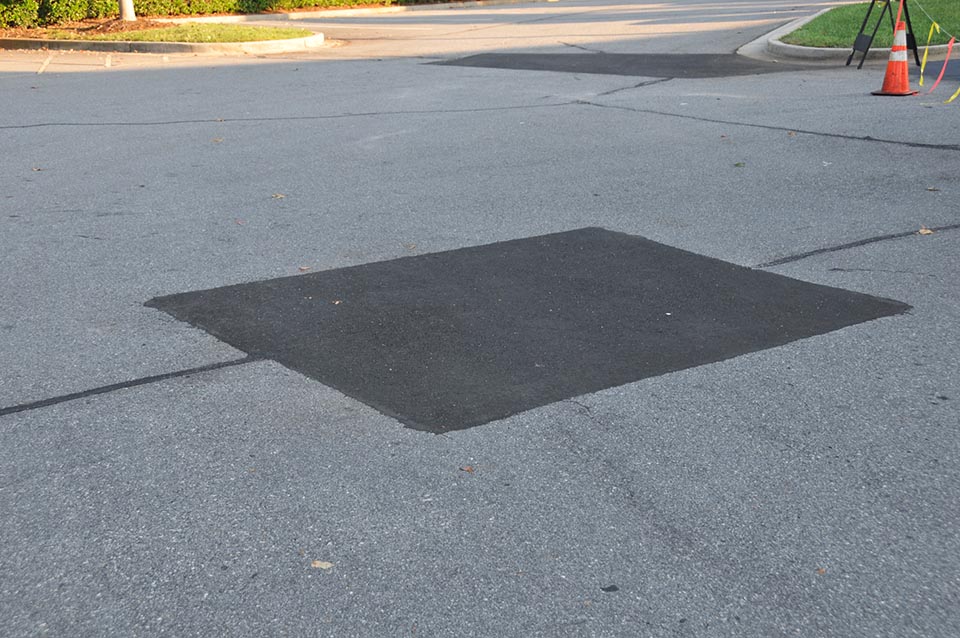
If your existing driveway has a solid base but a worn, cracked surface, you may not need to tear it out. An asphalt overlay adds a new layer on top. It’s usually 1.5 to 2 inches thick. Both the Colorado and Ontario guides use that same range.
An overlay only works if the driveway under it is in decent shape. Before paving, the crew should:
- Cut out and patch soft spots, potholes, and badly broken areas.
- Fill large cracks.
- Clean the surface well.
- Spray a tack coat so the new asphalt sticks to the old.
Cracks in the old driveway can show through a new overlay over time. If your driveway is sinking or breaking up in many places, a full replacement is often the better buy. Learn more about asphalt resurfacing or asphalt repair.
How Thick Should an Asphalt Driveway Be: Heavy Vehicles and Business Driveways
Some driveways do more than park the family car. If you have an RV, a boat, a dump trailer, or a work truck that comes and goes every day, your driveway needs to be built for it.
- Heavy home use: 3 to 4 inches of asphalt over 6 to 8 inches of rock, placed in two layers.
- Shared driveways and small business entrances: At least 3 to 4 inches, with the base built for the heaviest trucks that use it.
- Commercial lots with regular truck traffic: These need a design built around the expected loads, and they’re usually thicker than any home driveway.
The spots that take the most abuse are where trucks turn, back up, or park in the same place every day. Building those areas a bit thicker can save you a lot of repairs. If you’re planning a lot or a business entrance, see our commercial parking lot paving page.
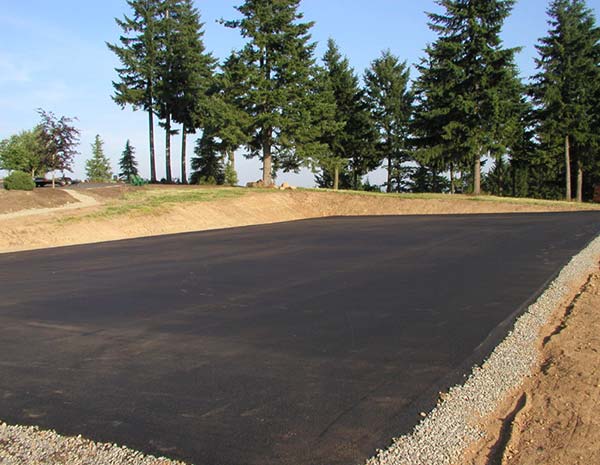
How to Make Sure Your Driveway Is Built to the Right Thickness
Thickness is easy to promise and hard to see once the job is done. Here’s how to protect yourself.
Questions to Ask Your Paving Contractor
- How thick will the asphalt be after compaction?
- How deep will the crushed rock base be after compaction?
- Will you place it in one layer or two?
- How will you make sure water drains off the driveway?
- Will you put the thickness in writing?
How Can I Check the Thickness?
- Watch the edges. Before the edges are backfilled, you can often measure the asphalt with a tape.
- Ask about tonnage. Asphalt weighs roughly 110 pounds per square yard for each inch of thickness. A contractor can tell you how many tons your job needs, and that number should line up with the thickness on your quote.
- Pick a contractor who explains the work. A good crew will walk you through each step. Our guide to the asphalt paving process step by step shows what to expect.
Does Thickness Change the Cost of an Asphalt Driveway?
Yes. More asphalt and more rock mean more material and more hauling. Still, going from 2 to 3 inches usually adds much less than people expect, because the cost of digging out, grading, and setting up the crew stays about the same. A driveway that’s too thin often costs more in the long run because it needs repairs sooner.
How Thick Should an Asphalt Driveway Be? Frequently Asked Questions
How thick should a residential asphalt driveway be?
Most residential driveways need 2 to 3 inches of compacted asphalt over 4 to 8 inches of compacted crushed rock. Go with 3 inches or more if your soil is soft or wet, or if you park heavy vehicles.
What is the minimum thickness for an asphalt driveway?
Two inches of compacted asphalt is the accepted minimum for a new driveway. It should sit on a well-compacted rock base with good drainage.
How thick is an asphalt overlay?
An asphalt overlay on an existing driveway is usually 1.5 to 2 inches thick. The old surface needs to be patched, cleaned, and tack coated first.
Can you pave over an existing asphalt driveway?
Often, yes. If the base is still solid and the driveway isn’t sinking, an overlay can give you a new surface for less than a full replacement.
Why does my quote say “compacted” thickness?
Asphalt shrinks to about three quarters of its loose thickness when it’s rolled. Compacted thickness is the true finished thickness, so it’s the number that should be in your contract.
Does a thicker driveway need less maintenance?
A thicker driveway holds up better, but it still needs care. Seal cracks early and sealcoat on a regular schedule to keep water and sun from wearing it down.
How long does an asphalt driveway last?
A well-built asphalt driveway usually lasts 15 to 25 years. The right thickness, a good base, and regular maintenance push it toward the long end.
Ready to Talk About Your Driveway?
William Stanley & Sons Paving has built asphalt driveways across Portland, Gresham, Lake Oswego, West Linn, Tigard, Hillsboro, Vancouver, WA, and nearby communities for more than 30 years. We’re a third-generation family business. We’ll look at your soil, your drainage, and what you drive, then tell you exactly how thick your driveway should be and why.
Call us at 503-243-1274 or request a free estimate today.