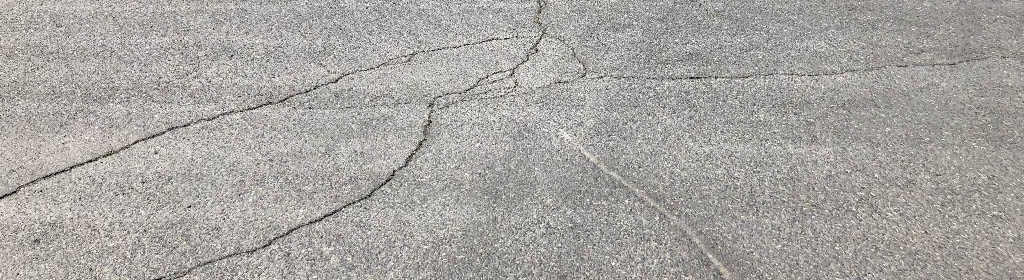
For most property owners in the Portland area, a small crack in the asphalt is easy to ignore. It does not seem like an urgent problem when compared to roof leaks or HVAC issues. However, in the world of pavement maintenance, a crack is more than a cosmetic flaw. It is a direct opening to the foundation of your property.
If you leave it open, you are essentially inviting the Pacific Northwest rain to destroy your investment from the inside out.
Understanding why cracks form and the role of professional asphalt crack repair is vital for any business owner or property manager. Asphalt is a resilient material, but it has one major weakness: water. When water gets under the surface, the clock starts ticking on a total pavement failure.
By taking a proactive approach to repair, you can extend the life of your driveway or parking lot by decades while avoiding the massive costs of a full replacement.
The Science of Water Damage: Why Asphalt Crack Repair Cannot Wait
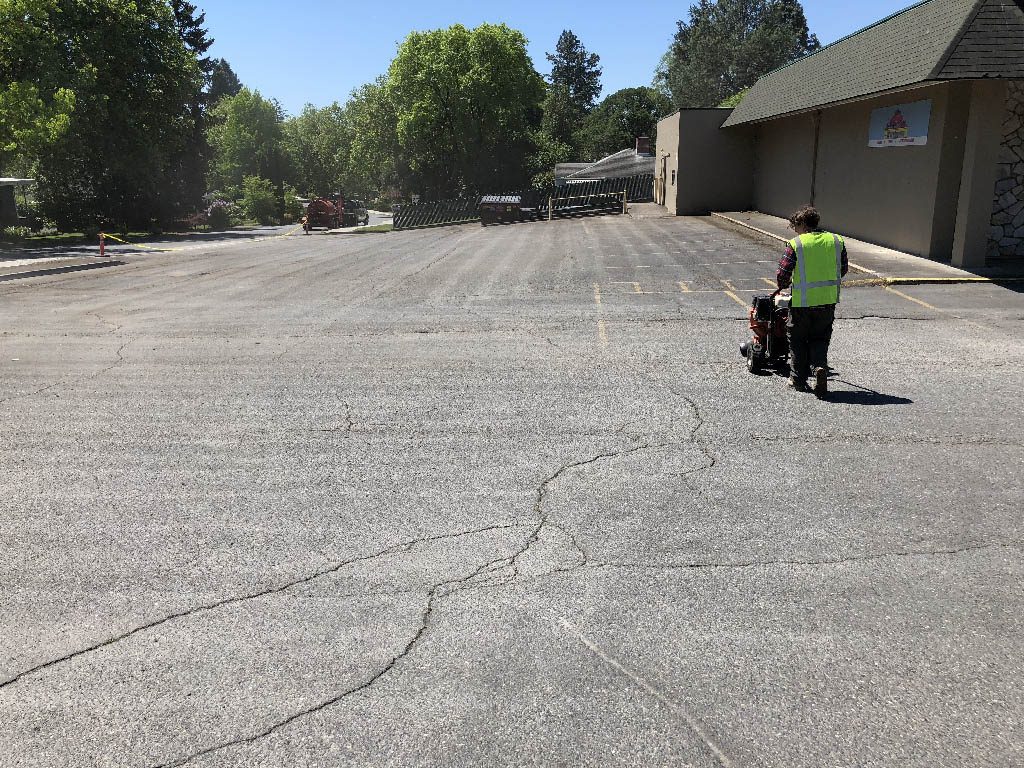 To understand why crack repair is so important, you have to look at what is happening beneath the surface. Asphalt is designed to be flexible. It sits on a base of compacted gravel and soil. As long as that base stays dry and firm, the asphalt can support the weight of heavy cars and trucks without shifting.
When a crack opens, that protection is gone. In a rainy climate like ours, water immediately finds its way into that opening. It travels down through the asphalt and saturates the gravel base. Once that gravel becomes wet, it loses its strength. It turns into a soft, muddy layer that can no longer support weight.
When a vehicle drives over that specific spot, the asphalt flexes too much and snaps. This is how a simple crack turns into a deep pothole.
The Hidden Threat of the Freeze-Thaw Cycle
While Portland does not have the harsh winters of the East Coast, we still deal with a dangerous freeze-thaw cycle. Even a light frost can cause major damage to open asphalt. When water enters a crack and the temperature drops, that water turns into ice.
As water freezes, it expands by about nine percent. This expansion puts immense pressure on the walls of the crack, pushing the asphalt apart. When the ice melts, it leaves behind a larger void than before. This process happens dozens of times each winter in the Northwest. Over a single season, a hairline fracture can grow into a wide gap that is much more difficult and expensive to seal.
Identifying Different Types of Asphalt Cracks
Not all cracks are created equal. Knowing what you are looking at can help you decide how quickly you need to act. Here are the most common types found on local properties.
Longitudinal and Transverse Cracks
These are the straight lines you see running down the middle or across your lot. They often happen because of the natural aging process or because the asphalt was not laid perfectly in the first place. These are usually the easiest to fix if you catch them early.
Edge Cracking
These cracks appear along the outer edges of a road or driveway. They usually mean the soil at the edge of the pavement is not providing enough support. This often happens if the drainage at the side of the lot is poor, allowing water to sit and soften the earth.
Alligator Cracking
If your asphalt looks like the skin of a reptile, you have a serious problem. Alligator cracking is a sign of structural failure. It means the base layer has already been compromised by water or heavy loads. At this stage, simple crack sealing will not work. You likely need to dig out the area and replace the base before paving again.
The True Cost of Pavement Neglect
Many property managers look at crack repair as an optional expense. However, the math tells a different story. The cost of sealing a crack is measured in cents per foot. The cost of replacing failed asphalt is measured in dollars per square foot.
If you ignore a hundred feet of cracks this year, you might save a few hundred dollars. But by next year, those cracks will have allowed enough water in to create several large potholes. The cost to cut out and patch those areas can be five to ten times higher than the original seal job. If the damage spreads to the entire lot, you could be looking at a bill for tens of thousands of dollars. Proactive maintenance is always the most affordable path.
The Professional Asphalt Crack Repair Process: Why Detail Matters
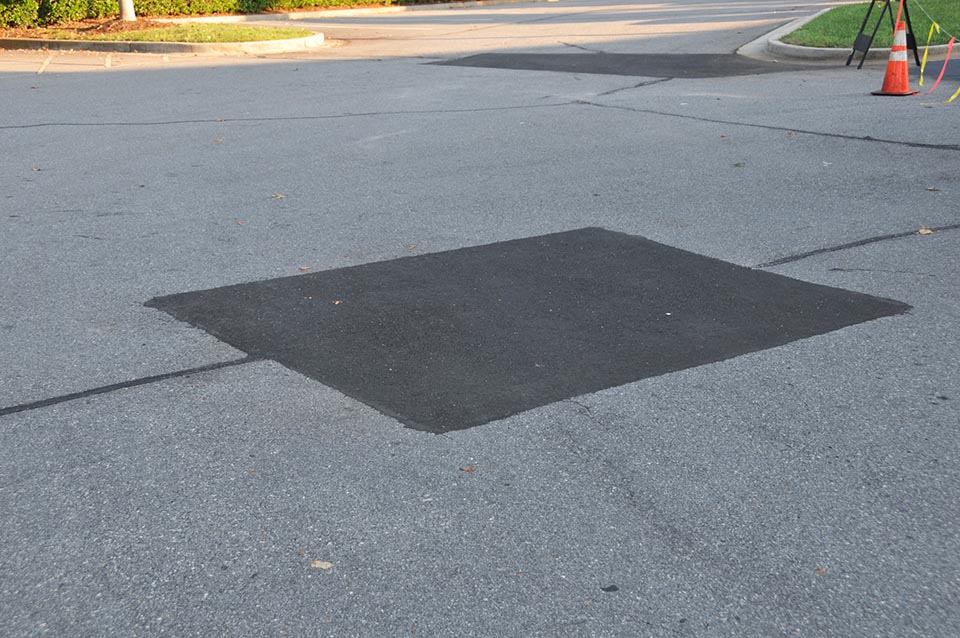 A quality repair is about more than just pouring a filler into a hole. To make a repair last, the surface must be prepared correctly. A professional team follows a specific set of steps to ensure the bond is permanent.
The first step is cleaning. Sealant will not bond to dirt, moss, or loose gravel. Using high-pressure air and wire brushes, the team removes every bit of debris from the crack. If there is vegetation growing in the gap, it must be killed and removed entirely. If the roots are left behind, they will continue to grow and push the new sealant right out of the crack.
Once the area is clean and dry, a hot-rubberized sealant is applied. This material is heated to a liquid state and poured directly into the crack. Unlike the cold-pour kits found at hardware stores, hot-rubberized sealant stays flexible even after it cools. It can stretch and shrink as the asphalt moves with the temperature.
This flexibility is what keeps the water out during the rainy season.
Liability and Safety for Business Owners
Beyond the structural damage, open cracks are a significant liability for business owners. A wide crack is a perfect place for a high heel to get stuck or for a customer to trip. In the Pacific Northwest, those cracks can also collect ice in the winter, creating slippery spots that are hard to see.
If a customer falls on your property, you could be held liable for their injuries. Maintaining a smooth, well-sealed parking lot shows that you are a responsible property owner. It keeps your visitors safe and protects your business from unnecessary legal headaches.
Why Experience Beats a DIY Approach to Asphalt Crack Repair
It can be tempting to buy a few jugs of crack filler and try to handle the job yourself. However, DIY products rarely stand up to the Portland weather. They tend to become brittle and crack within a single season because they lack the rubber content of professional materials.
A professional team has the equipment to heat sealant to the exact temperature needed for a deep bond. They also have the experience to know which cracks can be saved and which ones require a more intensive repair. Investing in professional expertise ensures the job is done once and done right.
Frequently Asked Questions About Asphalt Crack Repair
Does crack repair make the cracks disappear completely?
No, crack repair is a structural fix, not a cosmetic one. The black sealant will be visible against the gray of older asphalt. While it may not look perfect, it is doing the vital job of keeping water out of your foundation. If you want a uniform look, we suggest sealcoating the entire lot after the crack repairs are finished.
How long will the lot be closed for crack repairs?
One of the best things about hot-rubberized sealant is how fast it sets. It usually cools and becomes firm within thirty to sixty minutes. For most commercial properties, we can work in sections so that your customers always have a place to park. We can even schedule the work during your off-hours to avoid any disruption.
What happens if I seal a crack that is still wet?
If you apply sealant to a damp crack, the moisture gets trapped underneath. As the sun warms the asphalt, that moisture turns into steam and tries to escape. This creates bubbles and eventually pushes the sealant up and away from the asphalt. This is why we monitor the local weather so closely to find a dry window for our work.
Can you fix cracks in the middle of a Portland winter?
It is difficult but not impossible. The main challenge is finding a dry day where the temperature is above freezing. We generally recommend doing major crack repair during the late spring, summer, or early fall. This ensures the best bond and the longest-lasting results.
Is there a point where a crack is too big to be sealed?
Yes. Generally, once a crack is wider than an inch or if the edges are crumbling away, a simple seal is no longer effective. At that point, the area usually needs a mastic repair or an asphalt patch. We evaluate each lot to make sure we are providing the right solution for the specific damage we see.
Protect Your Property with a Third-Generation Partner
Your driveway or parking lot is a major part of your property’s value. At William Stanley & Sons Paving, we understand the importance of doing things right the first time. Our family has been serving the Portland and Vancouver area for over thirty years, passing down the knowledge and skills needed to handle our unique local climate.
We focus on honest communication and expert craftsmanship. We don’t consider a job done until you are satisfied with the result. If you are starting to see cracks in your asphalt, do not wait for the rain to cause more damage. Let our experience work for you.
Contact William Stanley & Sons Paving today for a free evaluation of your asphalt and let us help you protect your investment for years to come.