
When you think about your commercial property, the asphalt probably is not the first thing on your mind. However, for every customer, delivery driver, and tenant, those driving surfaces are the primary arteries of your business operations. A parking stall is designed for a vehicle to sit still, but commercial asphalt paving surfaces are built for motion, weight, and constant stress.
In the Portland metro area, these surfaces face a relentless combination of heavy vehicle loads and consistent rainfall. Understanding the difference between a simple parking area and a dedicated commercial asphalt driving lane is the first step in avoiding massive repair bills down the road.
By focusing on a few key engineering and maintenance principles, you can ensure your infrastructure remains a quiet, reliable partner in your business success.
Commercial Asphalt Paving: Engineering for the Heavy Lifters
The most common mistake made in commercial paving is treating every square foot of the lot the same way. In reality, a lane used by a waste management truck or a heavy freight delivery vehicle requires much more structural support than a space for a compact car.
These heavy vehicles put a dynamic load on the asphalt, meaning the weight shifts and pushes against the surface as the vehicle moves or turns. If the sub-grade was not properly compacted or if the asphalt layer is too thin for the volume of traffic, you will quickly see signs of distress.
Rutting, which looks like troughs in the wheel paths, is a clear sign that the driving surface was not engineered for the weight it is carrying. When you look for effective paving solutions, it is important to remember that the most cost-effective path is building a surface that can actually handle your specific daily traffic count.
The Battle Against the Pacific Northwest Rain
In cities like Beaverton, Gresham, and Vancouver, rain is the primary factor in pavement failure. Asphalt is naturally porous to some degree, and when water is allowed to sit on the surface, it eventually finds a way into the foundation. For a commercial asphalt driving surface, standing water is a recipe for disaster.
Precision grading is vital. Every driving lane must be sloped correctly to ensure water moves toward a drain or a collection point. If water is allowed to pool in a high-traffic lane, the weight of passing cars will actually pump that water deeper into the asphalt. This softens the sub-base and leads to rapid cracking.
Proper drainage management is the single best way to protect your asphalt investment in our local climate.
Traffic Flow and Safety Requirements
A well-maintained driving surface does more than just look good; it dictates how people behave on your property. Confusing layouts or faded markings lead to accidents and property damage. For a business owner, a clear and intuitive commercial asphalt driving path reduces liability and improves the customer experience.
If your lot feels cramped or if delivery trucks are struggling to make turns, it may not be a space issue. It may be a layout issue. Proper lane widths and turn radii are essential for commercial sites that handle larger vehicles. When the layout is correct, the traffic moves safely and predictably, which reduces the wear and tear on your asphalt from awkward braking and tight turning.
Frequently Asked Questions About Commercial Asphalt Paving
Why do driving lanes often fail before the rest of the parking lot?
This is due to the frequency and type of weight they carry. Parking stalls hold static weight, but driving lanes handle dynamic loads. Every time a car brakes, accelerates, or turns, it puts horizontal stress on the asphalt. Over thousands of repetitions, this stress causes the material to shift or crack if it was not built with enough structural depth.
How can I tell if my asphalt’s sub-base is failing?
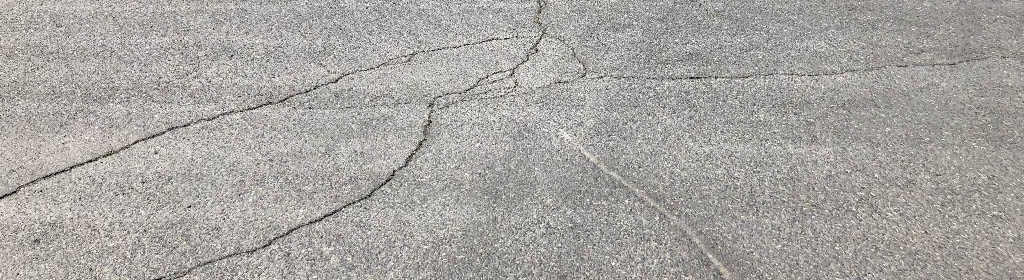
Look for alligator cracking or deep ruts in the wheel paths. If you see water seeping up through the cracks even when it hasn’t rained recently, that is a sign that the ground underneath is saturated. When the base fails, the asphalt loses its support and will begin to collapse under the weight of traffic.
Does the turning radius of delivery trucks impact commercial asphalt paving wear?
Yes, significantly. When a heavy truck turns its wheels while moving slowly, it creates a scuffing action on the asphalt. If the turning radius is too tight, this action can actually tear the surface or create shoving, where the asphalt ripples. Designing wider turns for heavy vehicles is a great way to extend the life of your commercial asphalt driving lanes.
Can I upgrade a residential-grade surface for commercial driving?
It is difficult to do without a full reconstruction, but a structural overlay can sometimes help. This involves adding a new, thicker layer of asphalt over the old surface. However, this only works if the foundation is still solid. If you are moving from light traffic to heavy commercial use, a professional evaluation is necessary to see if the current base can handle the new load.
How does the Portland freeze-thaw cycle affect commercial lanes?
Even though we don’t get many deep freezes, the constant swing between 30 and 50 degrees is tough on asphalt. Water gets into small cracks, freezes, and expands. In high-traffic driving lanes, this process is accelerated because the weight of the cars constantly massages those cracks, making them grow faster than they would in a quiet parking stall.
Partner with a Third-Generation Legacy For Your Commercial Asphalt Paving
If your commercial property is showing signs of wear, or if you are planning a new infrastructure project, you need a partner who understands the specific challenges of the Portland region. William Stanley & Sons Paving brings over 30 years of family-led experience to every commercial asphalt driving project. We focus on building durable, high-performance surfaces that improve your property’s value and operational safety.
Contact William Stanley & Sons Paving today for an expert consultation on your commercial asphalt paving needs and let our family help yours.